SPUR treats education as infrastructure. A country that wants to build with AI needs a pipeline of people who understand it - from curious kids, to working professionals, to founders shipping real products. We run that pipeline as a public good: free courses, open compute access, and a studio path for the learners who want to keep going.
Three principles shape everything we put in front of a learner. The first course is written so a ten-year-old can follow it and a skeptical parent can finish it in an afternoon. Every later course ends with something you built, not a certificate-for-showing-up. And the whole platform runs on SPUR's Canadian compute - graduates who keep going get sovereign GPU access through the studio.
Self-paced. Certificate-bearing. Capstones run on SPUR's own GPUs. Pick a course and dive in.
A gentle, kid-first curriculum covering what AI is, where it shows up in everyday life, and how to talk to it safely. Short lessons with Chip the AI helper, plus fun activities to do together. Nothing to install, nothing to sign up for.
A gentle intro to AI. What it really is (a very practiced word-predictor), how it learns, what it can and cannot do today, and how to talk to it. Short lessons, short quizzes.
The full intro course - prompting, building with AI, RAG, agents, fine-tuning, and shipping to production. Ends with a capstone you submit for SPUR review and a verifiable certificate.
Real prompting patterns, RAG end-to-end, embeddings and vector search, long-context strategies, multimodal basics, and shipping your first AI feature.
Agents that take action, fine-tuning and LoRA, evaluation that catches regressions, multi-agent orchestration, retrieval at scale, cost and latency engineering.
Transformers from the inside, post-training (RLHF, DPO, synthetic data), Mixture-of-Experts, efficient attention, inference optimization, AI safety and governance.

The master capstone project: create a large language model from nothing. Compute budgets and scaling laws, the data pipeline, tokenizer, a modern transformer, training and distributed scaling, post-training into an assistant, evaluation, and shipping. Where a topic has its own module, this course assembles them into one build.
How to actually use AI in a real job. Daily-driver models, prompts that separate pros from tourists, work agents, research and decision-making, team rollout.
Create a free teacher account, spin up a classroom for any course, and share a 6-character invite code. Your students sign up, enter the code, and their progress appears on your dashboard. Built for K-12 teachers, universities, bootcamps, and corporate L&D teams. Need something tailored? SPUR will build a custom curriculum for your program - domain, tools, pacing, capstones, all of it.
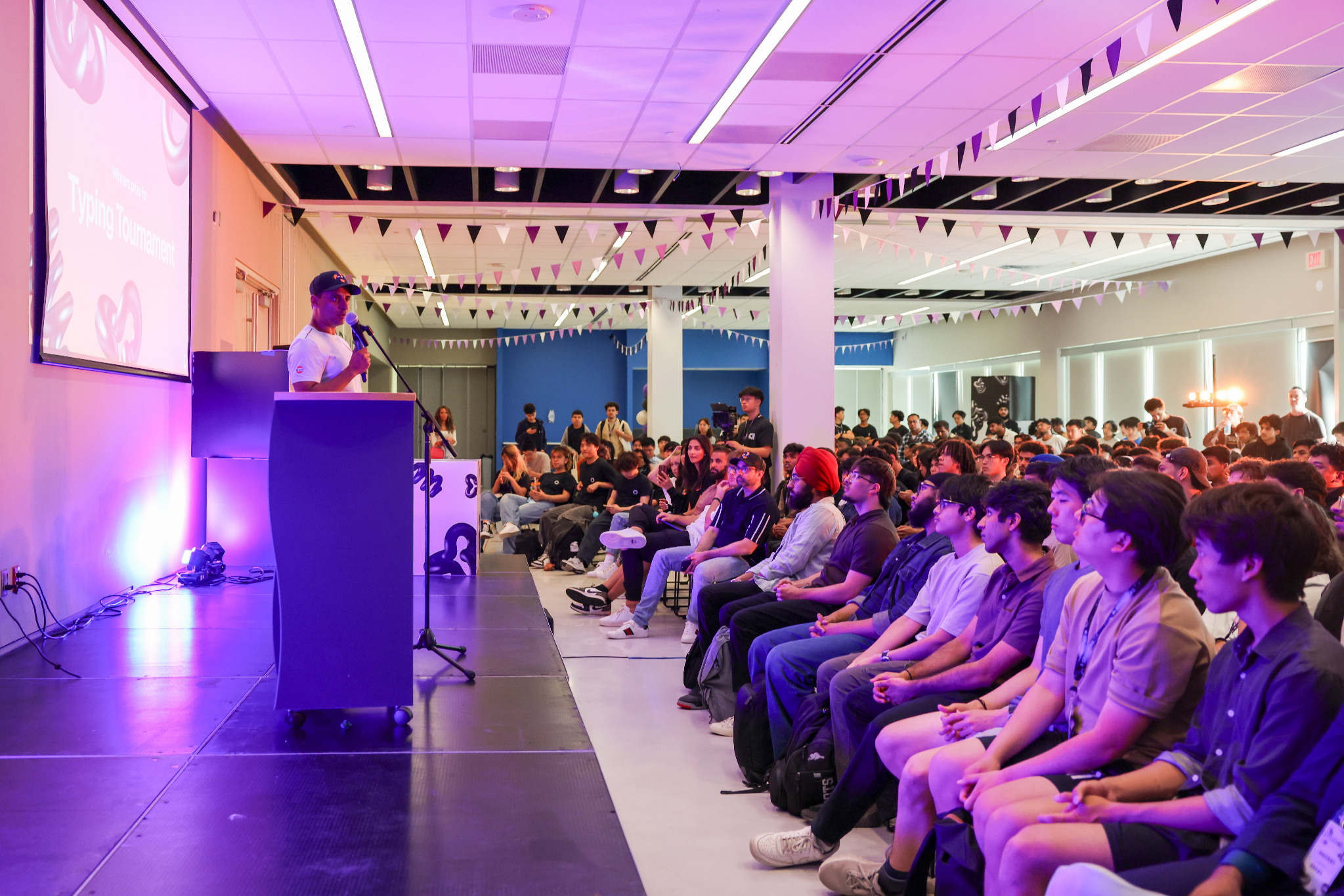
SPUR awards scholarships each year to students pursuing AI, HPC, or quantum research who face financial barriers. Awards cover tuition, compute credits, and (for selected recipients) on-site internships at the SPUR Innovation Centre. The full AI Foundations course is free globally; international learners can apply for SPUR GPU credits on the merit of their capstone proposal.
See scholarships ->
All courses are free. The first one takes an afternoon. By the end, you have a project you built.