A sovereign Quebec AI data centre and SPUR innovation centre north of Montreal, on the Hydro-Quebec clean hydroelectric grid. One site, three layers: Blackwell-class GPU racks, closed-loop vertical gardens grown from the compute waste heat, and a SPUR venture-studio innovation centre on the same grounds. 5 MW available now, 20 MW expansion, 114,000 sq ft, with Quebec data residency under Law 25.
A Quebec eco data centre engineered for the way modern AI fleets actually run - clean power, cold-climate free cooling, in-province data residency, and a closed energy loop that turns waste heat into food.
SPUR Innovation Centre - Mirabel is one site, three layers. A sovereign Quebec AI data centre inside an industrial shell that already has the power, the zoning, and the structure to host modern Blackwell-class GPU racks. A vertical farm and greenhouse coupled to the data centre's waste heat - food grown from the same kilowatt that trains the model. And a SPUR innovation centre on the same grounds, where founders, operators, and engineers in SPUR's venture studio build next to the racks they deploy. Compute, food, and AI innovation from a single clean Hydro-Quebec kilowatt.
Most data centres burn power to make heat, then burn more power to throw that heat away. SPUR Mirabel does the opposite - it sits on one of the cleanest, lowest-cost grids in North America, in a climate cold enough to cool the data hall for free much of the year, and pipes the heat it cannot use straight into vertical gardens that grow food on the same site through the Quebec winter. Clean in, food out, the same closed-loop model SPUR runs at Fergus, brought to Quebec.
Mirabel is a SPUR Innovation Centre. Alongside the racks, on-site space for founders, operators, and engineers in SPUR's venture studio to build, test, and deploy AI next to the compute that runs it - capital, compute, and a campus in one Quebec location.
Among the cleanest and lowest-cost electricity grids in North America, overwhelmingly hydroelectric. Low-carbon kilowatts for AI training and inference, with the price stability a long compute lease needs.
Quebec's climate is one of the site's biggest advantages. For much of the year the outside air is cold enough to cool the data hall directly - cutting chiller load, lowering PUE, and saving power that sites in Ontario or the US South spend on mechanical cooling.
Data stays in Quebec and in Canada. Engineered for Quebec Law 25, PIPEDA-aligned, with no US CLOUD Act exposure. A sovereign in-province home for tenants who are required to keep workloads on Quebec soil.
Recovered compute heat feeds vertical gardens grown right in the data hall - living green walls of leafy greens and herbs rising between the racks through the cold months, on heat that would otherwise vent to the sky. The same closed-loop physics as SPUR Fergus.
On the lands of Mirabel International Airport - a federally designated international airport of entry with on-site Canada Border Services customs, in a secured aerospace zone. 100G carrier-neutral interconnect into the Montreal metro corridor.
Mirabel joins the SPUR encrypted overlay mesh with daily cross-site backup, operated to the same standards as Waterloo and Fergus. A Quebec node in a pan-Canadian network.
SPUR Mirabel sits in the Mirabel International Airport zone, north of Montreal - federal Transport Canada airport lands in the National Airports System, beside one of only ten Canadian airports designated as an international airport of entry for cargo. A controlled, customs-cleared, federally secured gateway is not just a backdrop here. It is a feature of the site.
SPUR Mirabel runs as one integrated energy system. Clean hydro powers the racks, the cold Quebec air carries away most of the cooling load for free, and the heat the data hall cannot shed is recovered and piped into vertical gardens - growing food on the same kilowatt that ran the model. Four systems, engineered as one loop.
A 114,000 sq ft AI-ready data centre on Hydro-Quebec clean power, engineered for production GPU fleets.
Quebec's climate cools the data hall directly for much of the year, lowering PUE and chiller spend versus warmer regions.
The heat the data hall cannot use is recovered and piped into on-site vertical gardens and greenhouse space - food grown year-round from compute waste heat.
Hydro-Quebec hydroelectric power makes the whole loop low-carbon from the first watt - clean energy in, food and compute out.
Hydro-Quebec hydroelectric power feeds the racks - low-carbon, low-cost, stable.
Quebec's cool climate carries away most of the cooling load with free-cooling air, not chillers.
The residual heat from the GPU floor is captured instead of vented to the sky.
That heat warms on-site vertical gardens, growing food through the Quebec winter.
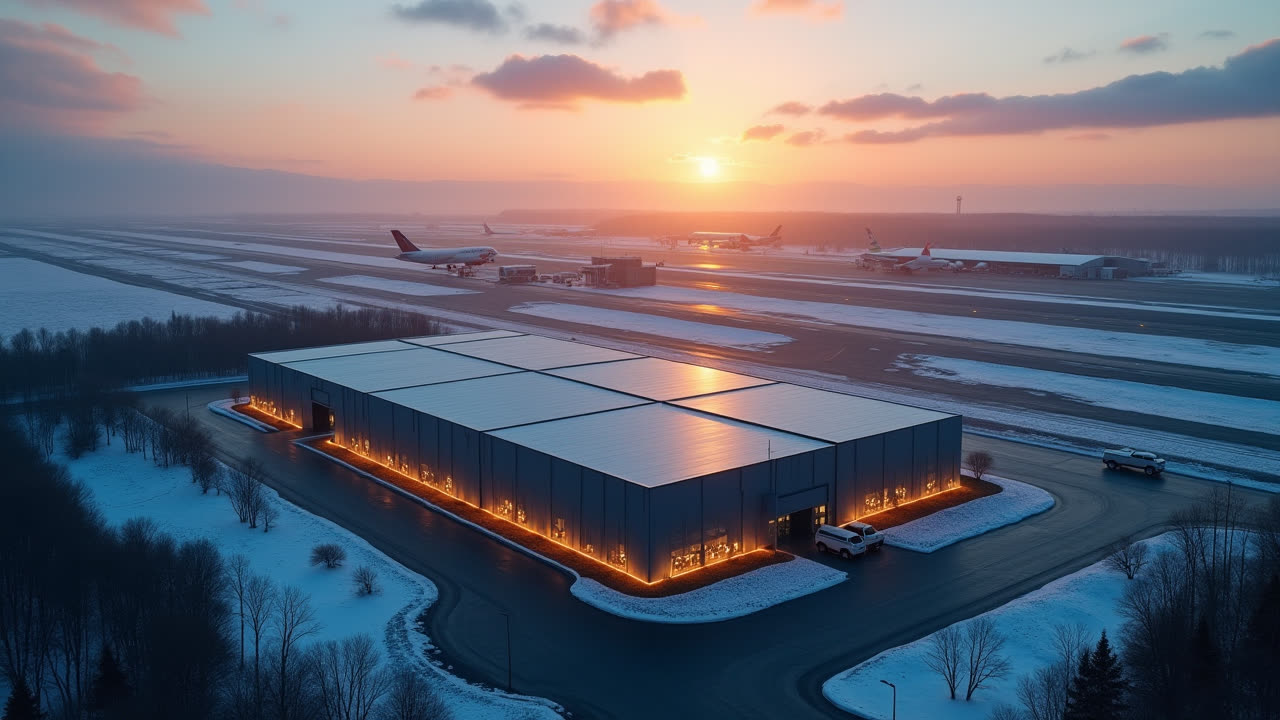
An aerial look at the SPUR Innovation Centre site in Mirabel - the building, the lot, and the Quebec corridor it sits in, north of Montreal.
Capacity is sized to real tenants. The first 5 MW is available now on Hydro-Quebec service in the existing 114,000 sq ft building; the expansion path takes the site to 20 MW, with the closed-loop vertical gardens commissioned as the heat load grows.
Available capacity today on Hydro-Quebec service in the existing 114,000 sq ft building. AI-ready, 250 kW per rack, 100G carrier-neutral.
Build-out to 20 MW on the 5-acre lot. Free-cooling capacity expanded; liquid-cooled rack rows added for dense AI fleets.
Waste-heat recovery commissioned into on-site vertical gardens and greenhouse space - year-round growing on recovered compute heat.
Marketing-distribution figures. Commercial terms and full control documentation available under NDA.
Clean Quebec hydro, cold-climate free cooling, in-province data residency under Law 25, and a closed energy loop that grows food. For Quebec-based and pan-Canadian tenants who need an in-province home, the conversation starts here.